
.jpg)
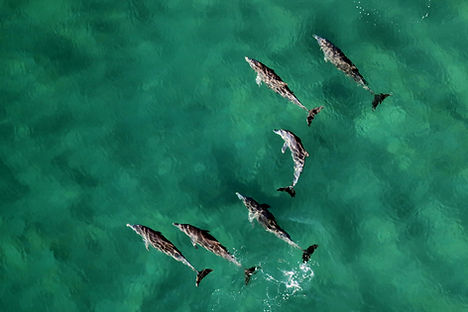
Every year between July and October, humpback whales travel from their Antarctic feeding grounds to the warm waters of the Mozambique Channel to breed and calve. Along the coast of southern Mozambique, these migrations bring the whales remarkably close to shore, creating some of the most intimate marine encounters in the Indian Ocean. The region is also home to whale sharks, manta rays, dolphins and one of the richest concentrations of marine megafauna in Africa.
Rather than observing wildlife from a distance, the expedition is designed around immersion into the rhythms of the Indian Ocean alongside marine biologists, conservation specialists and underwater photographers, offering a deeper understanding of the fragile ecosystems that sustain some of the largest marine species on Earth.
Accommodation
A beautifully designed beachfront lodge on the Tofo coastline, each room opening directly onto the Indian Ocean. On selected nights, a privatised yacht anchored offshore — falling asleep to the sounds of the ocean, waking at dawn directly on the water before the morning's research begins.

.jpg)
In the field
Working from a private vessel alongside researchers, guests participate in active humpback whale research — photo-identification, behavioural observation and pod monitoring. On days when conditions allow, guests may enter the water during carefully supervised encounters. Never to pursue the animals, but to observe respectfully when whales choose to approach. Depending on the season, the expedition may also include encounters with whale sharks, manta rays and other pelagic species that inhabit these nutrient-rich waters.
Between expeditions
Between days at sea, time slows along Mozambique’s Indian Ocean coastline — long stretches of white sand, warm waters, fresh seafood and quiet fishing villages untouched by large-scale tourism. Bespoke wellness treatments, dhow cruises at sunset and private oceanfront dinners offer moments of decompression between research sessions

.jpg)
Contribution
The expedition directly supports long-term conservation and research programmes in Mozambique, contributing to one of the most important ongoing studies of humpback whales and marine biodiversity on the East African coast.